
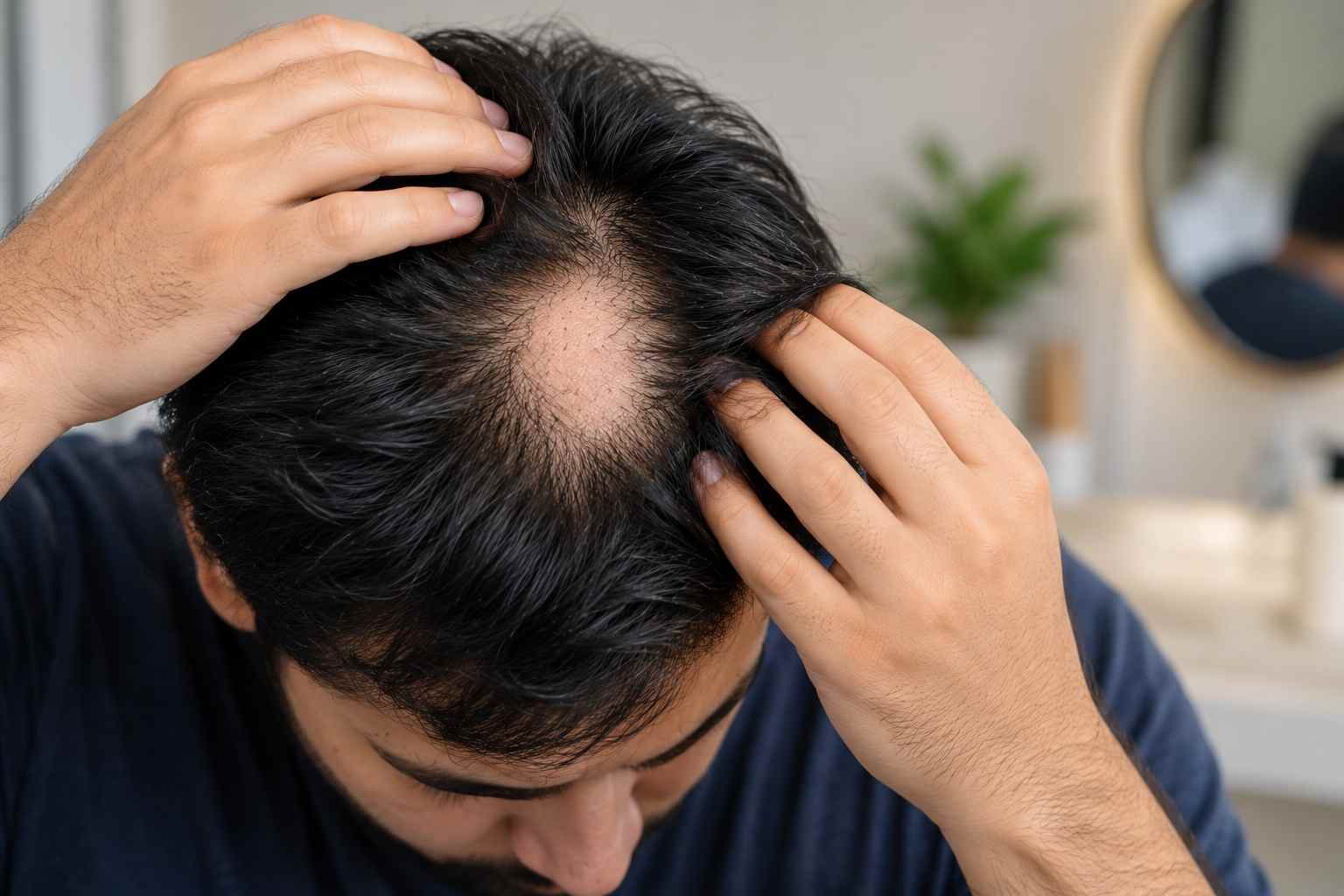
What Is Alopecia?
Alopecia is a term used for noticeable hair loss. It is not the same as the few hairs you normally lose every day. Some daily hair shedding is a normal part of the hair growth cycle. Alopecia can appear in different ways, such as gradual thinning, a receding hairline, a bald spot, sudden smooth bald patches, or hair loss from a larger area.
It can affect the scalp as well as the beard, eyebrows, eyelashes and other areas where hair grows. The way hair loss appears depends on its type and cause.
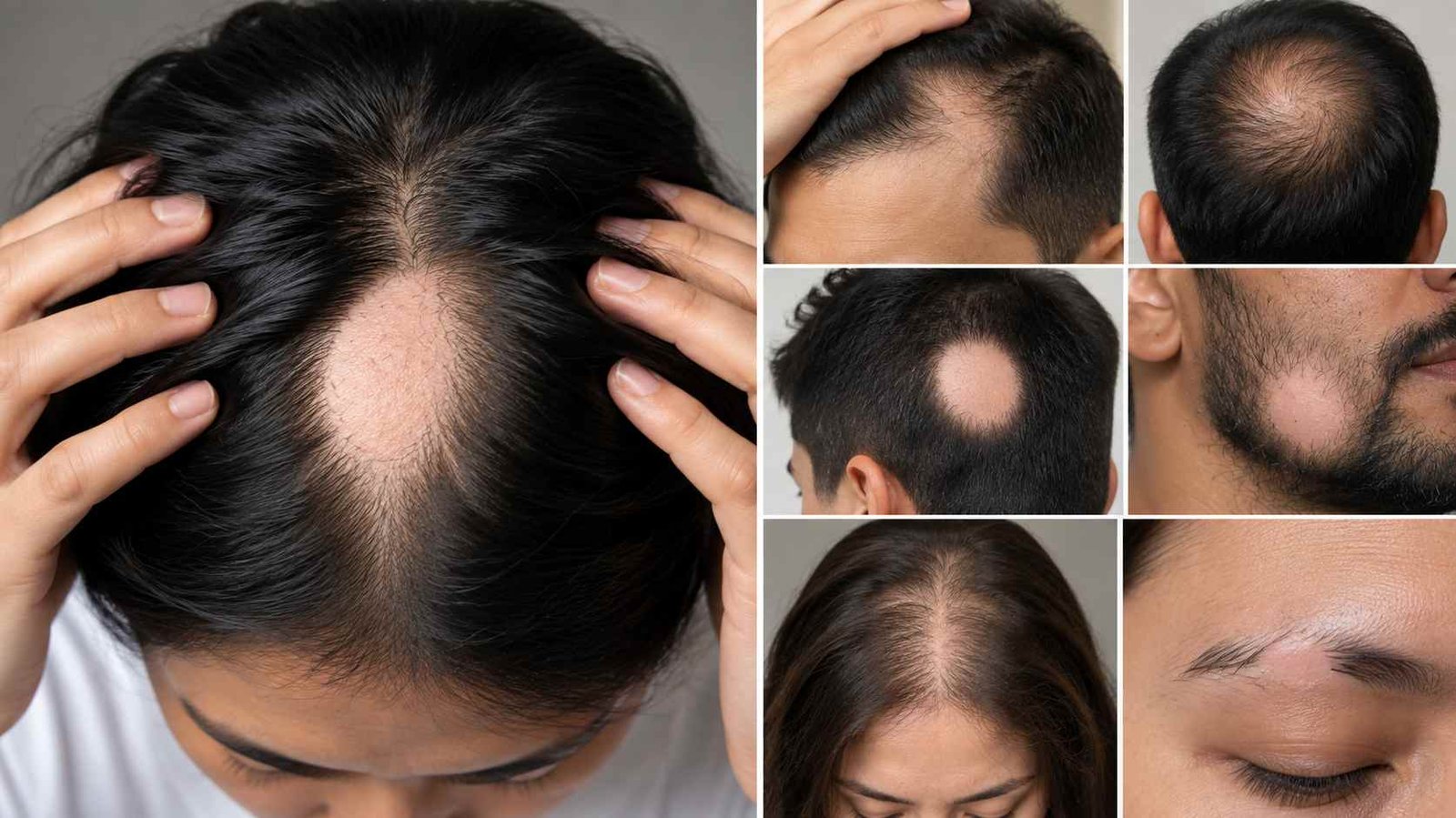
Alopecia is not one single condition. Genetics, autoimmune conditions, hormonal changes, certain illnesses, medicines, nutritional problems, scalp conditions and repeated pulling on the hair can all be associated with different types of hair loss.
So, if you have started noticing alopecia hair loss, the important question is not only how to stop the hair fall. It is also why it is happening.
Understanding the cause can help you decide what kind of treatment or hair-care approach may be appropriate.
What Are the Common Types of Alopecia?
There are several types of alopecia. Some develop slowly over time, while others can appear suddenly.
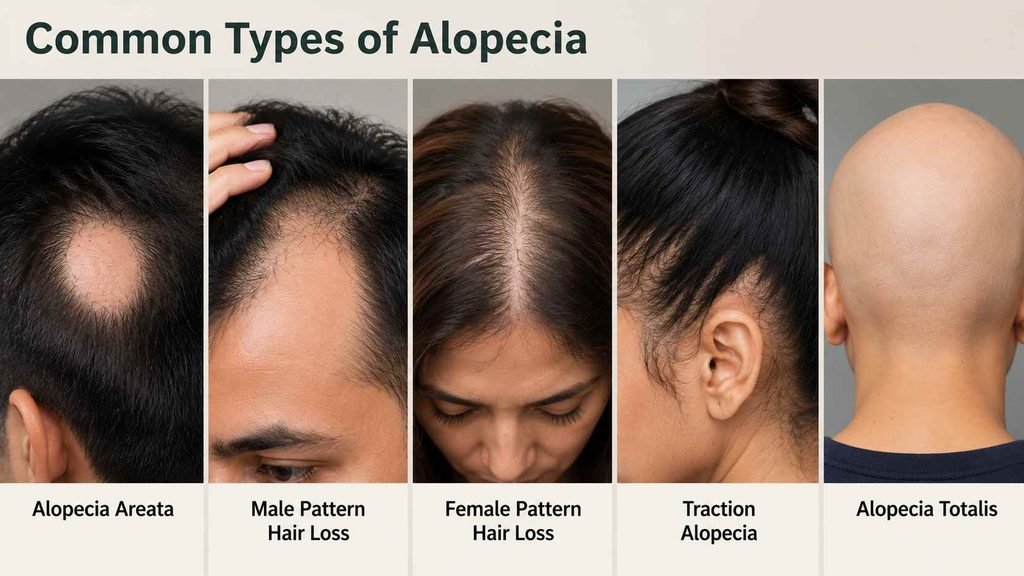
Alopecia Areata
Alopecia areata is an autoimmune condition that causes hair loss. It happens when the immune system mistakenly attacks the hair follicles.
It commonly appears as round or oval bald patches on the scalp. However, it can also affect the beard, eyebrows, eyelashes and other areas where hair grows.
The hair loss can appear suddenly. Some people may have only one or a few small patches, while others can develop more extensive hair loss.
Alopecia areata is not contagious.
If you suddenly notice a smooth bald patch on your scalp or beard, it is better not to assume that it is simply because of weak hair or poor hair care. A dermatologist can examine the area and determine whether it could be alopecia areata or another cause of hair loss.
Male Pattern Hair Loss
Hair loss in men is often related to hereditary or genetic factors.
It commonly appears as a receding hairline, thinning around the crown, or gradual thinning on the top of the scalp.
Unlike alopecia areata, this type of hair loss usually develops gradually rather than appearing as a sudden, smooth bald patch.
If your hairline is slowly moving back or the hair around your crown is becoming thinner over time, hereditary hair loss may be one possible explanation.
Female Pattern Hair Loss
Female alopecia can also be related to hereditary factors.
Women may notice gradual thinning over the top of the scalp or a widening of the hair parting. The hairline does not necessarily recede in the same way that it commonly does in men.
Hair loss in women can also be associated with hormonal changes and certain health conditions. Increased shedding can occur after childbirth, while conditions affecting the thyroid and some other health problems can also be associated with hair loss.
This does not mean that every woman with thinning hair has a hormonal or medical problem. The possible cause needs to be considered individually.
Traction Alopecia
The way you wear your hair can sometimes contribute to hair loss.
Regularly wearing hairstyles that pull tightly on the hair can cause traction alopecia. Continued pulling can damage the hair follicles and, in some cases, the hair loss can become permanent.
If thinning is mainly occurring around the hairline or areas where the hair is repeatedly pulled, reducing tension on the hair may be important.
Alopecia Totalis
Alopecia totalis is a more extensive form of alopecia areata in which a person loses all the hair on the scalp.
Another term you may come across is alopecia universalis. This refers to hair loss affecting the scalp and the rest of the body.
These terms describe how extensive the hair loss is. They do not, by themselves, explain why the condition developed.
Scarring Alopecia
Some types of hair loss can damage and scar the hair follicles. These are known as scarring alopecias.
This type of hair loss needs particular attention because a hair follicle that has been permanently destroyed cannot produce hair again.
If hair loss is accompanied by ongoing scalp inflammation, pain, significant itching, changes in the scalp surface or areas that appear scarred, it is better to get the problem assessed rather than relying only on home hair-care products.
What Causes Alopecia and Hair Loss?
There is no single answer to the question, “What causes alopecia?”
Different types of hair loss can have different causes.
Some possible causes include:
- Hereditary or genetic hair loss
- Alopecia areata
- Hormonal changes
- Thyroid and other health conditions
- Certain medicines or medical treatments
- Physical stress such as a serious illness or high fever
- Nutritional problems
- Some scalp infections
- Tight hairstyles that repeatedly pull on the hair
- Certain autoimmune or inflammatory conditions
Hair shedding can also become noticeable after events such as childbirth, major illness, surgery or high fever.
This is one reason why simply seeing more hair on your pillow, comb or in the shower does not tell you exactly why you are losing hair.
The pattern, timing and extent of hair loss are all important.
What Do Bald Patches on the Scalp Mean?
A bald patch on the scalp can have different causes.
Alopecia areata is one possibility, particularly when the hair loss appears suddenly in a round or oval, relatively smooth patch. However, other scalp conditions can also cause localized hair loss.
This is why it is not a good idea to diagnose the cause only from photographs or online searches.
A dermatologist may look at the pattern of hair loss, examine the scalp and ask questions about when the hair loss started, how quickly it is progressing, your health history and whether similar hair loss runs in your family.
Depending on what they find, they may recommend further examination or tests.
Can Alopecia Cause Hair Loss in the Beard?
Yes. Some types of alopecia can affect facial hair as well as scalp hair.
Alopecia areata can cause patchy hair loss in the beard. You may notice one or more areas where the beard suddenly becomes thinner or completely absent.
The same condition can also affect the eyebrows and eyelashes.
If you notice a new bald patch in your beard without an obvious reason, it is worth getting it checked rather than assuming that the problem is simply related to beard care.
Does Alopecia Hair Grow Back?
Sometimes it does, but hair regrowth depends on the type and cause of the hair loss.
In alopecia areata, some people experience hair regrowth, particularly when the hair loss is limited to a few patches. However, hair loss can also return, and some people may have more extensive or persistent hair loss.
Other types of hair loss behave differently.
For example, when a hair follicle has been permanently destroyed because of scarring, that follicle cannot produce hair again.
This is why there is no single answer to a search such as “How can I get alopecia hair growth?”
Before choosing a treatment or product, it is important to understand what is causing the hair loss.
When Should You See a Dermatologist for Alopecia?
A few loose hairs during the day are not necessarily a sign of a serious problem. Hair naturally goes through cycles of growth and shedding.
However, you should consider seeing a dermatologist if you notice:
- A sudden bald patch
- Hair loss that is spreading quickly
- Noticeable thinning that continues
- Hair loss in both the scalp and beard
- Loss of eyebrows or eyelashes
- Scalp redness, scaling, itching or pain along with hair loss
- Hair loss after a significant illness
- Hair loss that started after taking a medicine
- Hair loss that you cannot explain
- Areas where the scalp looks scarred or unusually smooth
A dermatologist can assess the pattern and possible cause of the hair loss.
Depending on the situation, they may examine the scalp more closely and may recommend additional tests to look for possible underlying causes.
The important point is simple:
Find the cause before choosing a treatment.
What About Alopecia Oil and Home Remedies?
It is common to look for an alopecia oil, hair oil or home remedy after noticing extra hair fall or a bald patch.
An oil can be part of a regular scalp-care routine, but it should not automatically be considered a treatment for every type of alopecia. The cause of hair loss matters more than the name used on a product.
For example, alopecia areata is an autoimmune condition in which the immune system attacks hair follicles. An oil should not be assumed to treat the underlying condition simply because it is marketed for hair loss.
If you prefer an Ayurvedic or oil-based approach for regular scalp care, you can consider an alopecia oil as a personal-care option, provided its ingredients and directions are suitable for you. However, it should not replace medical evaluation when hair loss is sudden, spreading, extensive or unexplained.
The more useful first question is:
“Why am I losing my hair?”
Once the cause is understood, you can make a more informed decision about treatment and scalp care.
The Bottom Line
Alopecia means noticeable hair loss, but it does not mean just one condition.
A receding hairline, gradual thinning, a sudden bald patch, beard hair loss and widespread loss of scalp hair can have different causes.
Alopecia areata is one cause of patchy hair loss, while hereditary hair loss, hormonal changes, certain illnesses, medicines, nutritional problems, scalp conditions and tight hairstyles can also contribute to hair loss.
If you have noticed a new bald patch or your hair loss is sudden, spreading or difficult to explain, getting the cause checked is more useful than trying several products at random.
Once you know what may be causing the hair loss, you can discuss suitable treatment and hair-care options with a qualified healthcare professional.
Frequently Asked Questions
Is alopecia the same as hair loss?
Alopecia is a term used for hair loss. It is a broad term and can describe different types and causes of hair loss. Some types cause gradual thinning, while others can cause sudden bald patches or more extensive hair loss.
What causes alopecia?
Alopecia can have different causes depending on the type. Hair loss may be related to genetics, autoimmune conditions, hormonal changes, certain illnesses, medicines, nutritional problems, scalp conditions or repeated pulling on the hair.
What is alopecia areata?
Alopecia areata is an autoimmune condition that causes hair loss. It often appears as round or oval bald patches on the scalp, but it can also affect the beard, eyebrows, eyelashes and other areas where hair grows.
Can alopecia areata cause bald patches on the scalp?
Yes. Sudden, round or oval patches of hair loss are a common feature of alopecia areata. However, other scalp conditions can also cause bald patches, so a new patch should not automatically be assumed to be alopecia areata.
Can alopecia cause hair loss in the beard?
Yes. Alopecia areata can cause patchy hair loss in the beard as well as on the scalp. It can also affect the eyebrows and eyelashes.
Does alopecia always cause permanent hair loss?
No. Some types of alopecia can improve or regrow, while other types may cause permanent hair loss. The outcome depends on the underlying cause and whether the hair follicles have been damaged or destroyed.
Can an alopecia oil help with hair loss?
An alopecia oil may be used as part of a regular scalp-care routine, but it should not automatically be considered a treatment for the medical causes of alopecia. If hair loss is sudden, spreading or unexplained, finding the underlying cause should come first.
When should I see a dermatologist for alopecia?
Consider seeing a dermatologist if you develop a sudden bald patch, rapidly spreading hair loss, persistent thinning, beard or eyebrow hair loss, or scalp symptoms such as redness, scaling, itching or pain. A dermatologist can help identify the possible cause before treatment is chosen.

Add comment